
Table of Contents
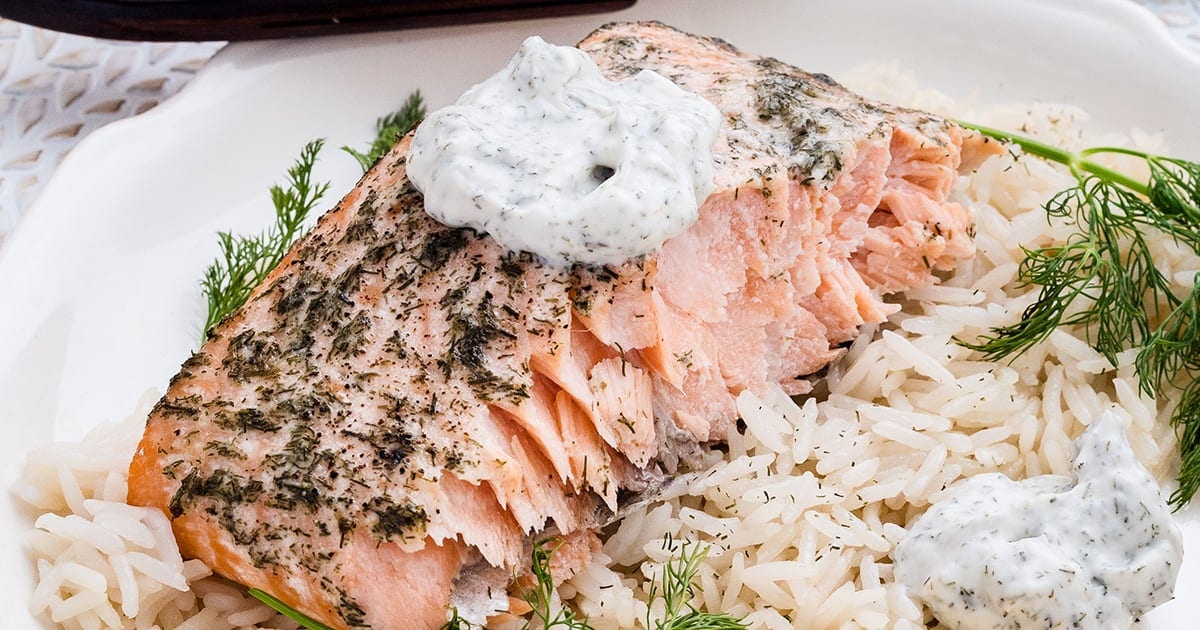
This whole baked salmon fillet with a simple creamy lemon and dill sauce is the kind of recipe that earns a permanent spot in your weekly rotation — quick, healthy, and genuinely delicious.
Jump to: ℹ️ Overview | 🛒 Ingredients | 📷 How To Make | 👩🍳 Recipe Tips | 🥗 Serving Suggestions | 📝Full Recipe Card | 🍽 More Fish Dinner Recipes
At A Glance
- ⏱ Ready In: 30–35 minutes
- 🍽 Serves: 4–6 (depending on the size of the fillet)
- 🌱 Diet: Gluten-Free, High-Protein, Low-Carb
- 💪 Nutrition Highlights: Rich in omega-3 fatty acids and protein
- 🥕 Main Ingredients: Whole salmon fillet, dill, mayo, sour cream, lemon, olive oil
- 🔥 Flavor Profile: Fresh, creamy, herby, with a gentle tang from lemon
- 🧊 Meal-Prep Friendly: Leftovers keep in the fridge for 3–4 days; great cold in a salad or a wrap
- 🥗 Best Served With: Roasted vegetables, steamed rice, a simple green salad, or crusty bread
Salmon is on our dinner table frequently, and this baked whole fillet with lemon dill sauce is one of my most-reached-for recipes when I need dinner on the table fast.
The salmon gets a quick seasoning and brush of mayo, olive oil, and dried dill before going into a hot oven — and that little bit of mayo does something wonderful, keeping the fish moist and adding a subtle richness that plain olive oil alone doesn’t quite achieve. While it bakes, you’ve got just enough time to stir together the creamy lemon dill sauce, which comes together in about two minutes flat. The sauce is tangy, herby, and cooling — the perfect contrast to warm, flaky fish.
Even picky eaters tend to love this one (salmon is one of the few fish recipes that gets a thumbs up from just about everyone at my table). It’s a genuinely easy, healthy weeknight dinner that feels a little special without requiring much effort.
👩🍳 You might also like these salmon dinner recipes: Mediterranean baked salmon fillets, teriyaki salmon bowls, grilled salmon salad with kale, corn & parmesan, Mediterranean salmon bowl, salmon bites with sweet chili glaze, and 25 salmon dinner ideas.
What You’ll Need
Here is what you’ll need for this baked salmon with lemon dill sauce recipe. Find the full measurements in the recipe card below.
For the salmon:
- Whole salmon fillet — A single large fillet (about 2 lbs / 900 grams) feeds 4–5 people easily. Look for one with the skin on to help hold the fish together during baking. Skin-off works too; just handle it a little more gently when transferring to the pan.
- Dried dill — The hero herb here. It has an earthy, slightly anise-like flavor that’s a natural match for salmon. Fresh dill works beautifully if you have it on hand — just use about a tablespoon.
- Mayonnaise — Just a small amount, mixed with olive oil and dill, and brushed over the fish. It acts as a moisture barrier and helps the top of the salmon stay juicy. Light mayo works just as well.
- Olive oil — Adds richness and helps the salmon cook evenly.
- Salt and pepper — Season lightly; the sauce brings plenty of flavor.
For the lemon and dill sauce:
- Sour cream — The base of the sauce, giving it that creamy, slightly tangy character. You can swap for light sour cream or Greek yogurt if you’d prefer a lighter option.
- Mayonnaise — Mixed in with the sour cream for extra body and richness. Light mayo is fine here too.
- Dried dill — Same herb as the salmon coating, which ties the whole dish together.
- Fresh dill – a little bit of chopped fresh dill to freshen it up.
- Lemon — Just half a lemon, squeezed in fresh. It cuts through the creaminess and lifts the whole sauce. Start with half and add more to your taste.
- Salt and pepper — Season to taste at the end.
How To Make Baked Salmon with Cream Dill Sauce
Find the full recipe and nutritional information below. Here are some handy step-by-step photos for how to make this baked salmon with lemon dill sauce.
- Preheat your oven to 400°F (200°C) and line a half sheet pan with parchment paper.
- In a small bowl, mix together 1 tablespoon of mayo, the olive oil, and 1 teaspoon of dried dill until combined.
- Lay the salmon fillet on the prepared baking tray and brush the mayo-dill mixture generously over the top. Season lightly with salt and pepper.
- Bake for 20–25 minutes, until the salmon flakes easily with a fork. I usually pull it at around 22–23 minutes — right in the middle of the suggested range — which gives you perfectly cooked, still-juicy fish. The internal temperature should be around 130–135°F (55–57°C) if you’re using a thermometer.
- While the salmon bakes, make the sauce. Stir together the sour cream, mayo, and dried dill in a small bowl. Squeeze in the juice of half a lemon, stir, and season with salt and pepper to taste.
- Serve the salmon straight from the pan with a generous dollop (or a whole ramekin, if you’re my husband) of the lemon dill sauce on the side.
Recipe Tips
- Don’t overcook it. Salmon dries out quickly when pushed past 140°F (60°C). Aim to pull it out when it just starts to flake — it’ll carry over a little from residual heat on the pan.
- Use a meat thermometer if you want to be precise. 130–135°F (55–57°C) gives you silky, just-cooked salmon. The FDA recommends 145°F (63°C), but most cooks and chefs prefer it slightly under for better texture and moisture.
- Adjust the sauce quantity. The recipe makes a generous amount of sauce — plenty for a family. If you’re cooking for two or you’re light on sauce, halve it. It keeps well in the fridge for a couple of days too.
- Swap sour cream for Greek yogurt. If you’d like a lighter sauce, plain full-fat Greek yogurt works really well in place of sour cream. It’s slightly tangier, which pairs nicely with the dill.
- Try fresh dill. If you have it in your garden or can grab it from the shops, fresh dill takes both the coating and the sauce up a notch. Use about 1 tablespoon fresh for the salmon coating and 2 tablespoons for the sauce.
- Storage: Leftovers keep in an airtight container in the fridge for 3–4 days. Cold salmon the next day is genuinely great flaked over a salad or tucked into a wrap. If reheating, do it gently at a low temperature — high heat will dry it out. Store the sauce separately.
- Make it ahead: You can mix the sauce up to 2 days in advance and keep it covered in the fridge. The mayo-dill brush for the salmon can also be prepped ahead and kept chilled until you’re ready to cook.
Serving Suggestions
This is a flexible, weeknight-friendly dinner that pairs well with almost anything. I usually serve it alongside steamed rice or roasted potatoes to soak up the sauce, plus a simple green salad or some steamed broccolini.
In warmer months, it’s excellent with a crisp cucumber salad — the cool crunch works beautifully with the warm, flaky fish.
If you’re feeding a crowd or want something a little heartier, this salmon sits nicely next to a tray of roasted vegetables like asparagus, zucchini, or cherry tomatoes. And honestly, a good loaf of crusty bread for mopping up the extra sauce is never a bad idea.
💬 If you’ve tried this baked salmon with lemon and dill sauce or any other recipe on the blog then don’t forget to rate the recipe and let me know how you got on in the comments below, I love hearing from you! You can also FOLLOW ME on Instagram, Facebook, Pinterest, YouTube, and or sign up to my Newsletter to see more of my delicious food.
Want to Save This Recipe?
Enter your email & I’ll send it to your inbox. Plus, get great new recipes from me every week!
By submitting this form, you consent to receive emails from Cooked & Loved
A simple whole baked salmon fillet with a creamy, tangy lemon and dill sauce on the side — a healthy, high-protein dinner that’s ready in about 30 minutes. Find step-by-step photos and more recipe tips above.
For the lemon and dill sauce:
-
Preheat your oven to 400°F (200°C / 180°C fan). Line a large rimmed baking sheet or half sheet pan with parchment paper.
-
In a small bowl, stir together the 1 tablespoon of mayo, olive oil, and 1 teaspoon of dried dill until well combined.
-
Place the salmon fillet on the prepared baking tray. Brush the mayo-dill mixture evenly over the top of the fish. Season lightly with salt and pepper.
-
Bake for 20–25 minutes, until the salmon flakes easily when tested with a fork. For best results, aim for about 22–23 minutes — this gives you moist, just-cooked fish. If you’re using a thermometer, pull it at 130–135°F (55–57°C) for tender, juicy salmon.
-
While the salmon bakes, make the sauce. In a small bowl, stir together the sour cream, mayo, and dried dill. Squeeze in the juice of half a lemon, stir to combine, and season with salt and pepper to taste.
-
Serve the salmon straight from the pan with the lemon dill sauce spooned over or alongside.
Key Recipe Tips: Don’t overcook the salmon — aim to pull it out when it just starts to flake; it’ll finish cooking on the tray. Check around the 22–23 minute mark for a 900 gram–1 kilogram fillet. The sauce quantity is generous; halve it if you’re cooking for fewer people.
Storage Tips: Cooked salmon keeps in an airtight container in the fridge for 3–4 days. The sauce keeps separately for 2–3 days. Enjoy leftover salmon cold over a salad — it’s excellent. Reheat gently at low temperature to avoid drying it out.
Make-Ahead Tips: The lemon dill sauce can be made up to 2 days in advance and kept covered in the fridge. The mayo-dill brush mixture can also be prepped ahead. The salmon is best cooked fresh.
FAQs:
What temperature should I bake salmon at? 400°F (200°C) is the sweet spot for baking a whole salmon fillet — hot enough to cook it through quickly without drying it out. If your oven runs hot, check it a minute or two early.
How do I know when salmon is done? The most reliable method is the fork test: press gently into the thickest part — if it flakes into clean layers, it’s ready. You can also use a meat thermometer; aim for 130–135°F (55–57°C) for moist fish, or 145°F (63°C) if you prefer it fully cooked through.
Can I use salmon fillets instead of a whole fillet? Yes, individual salmon fillets work well — just reduce the cooking time. Fillets around 150–170 grams (5–6 oz) will need about 12–15 minutes at 400°F, depending on thickness.
Can I make the sauce ahead of time? Yes. The lemon dill sauce keeps well in the fridge for up to 2–3 days. Give it a stir before serving.
How do I store and reheat leftover salmon? Store in an airtight container in the fridge for up to 3–4 days. To reheat, cover loosely and warm in the oven at a low temperature (around 275°F / 135°C) for 10–15 minutes. Cold salmon is also delicious flaked into a salad or grain bowl.
Is this recipe gluten-free? Yes — all ingredients are naturally gluten-free. Just check the labels on your mayo and sour cream to be certain, as some brands may contain trace additives.
Calories: 391kcal | Carbohydrates: 4g | Protein: 37g | Fat: 24g | Saturated Fat: 5g | Polyunsaturated Fat: 8g | Monounsaturated Fat: 8g | Trans Fat: 0.01g | Cholesterol: 117mg | Sodium: 762mg | Potassium: 960mg | Fiber: 0.2g | Sugar: 2g | Vitamin A: 282IU | Vitamin C: 2mg | Calcium: 62mg | Iron: 2mg